I have spent a lot of time in Halifax in the past year. I have been out for HPX Digital and for 2 workshops with Toon Nagtegaal (LinkedIn). It has allowed me the privilege of hanging out with Atlantic Canadian entrepreneurs. I’m going to try to spend additional time in Moncton, Saint John, Charlottetown and hopefully St. John’s (but a road trip like that will require additional planning and spousal support).

My next 2 trip are very different. The first is another workshop with Toon. The second is to attend Atlantic Venture Forum (still working on travel plans).

We are looking for startups that are “at the point where you have to push your business or business idea to the next level”.

The Workshop

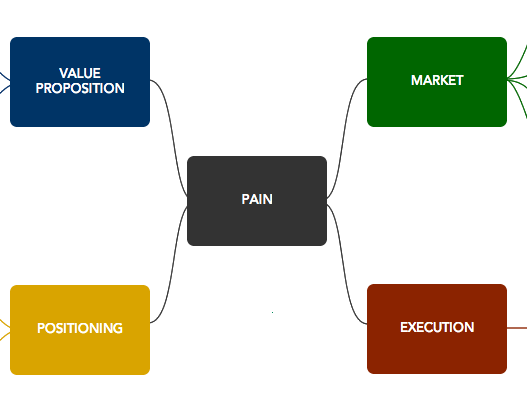
Subset of PhaseMap by Toon Nagetaal

The workshops with Toon are interesting. You can read Peter Moreira’s piece on the workshops. The workshop is a Thursday to Sunday ordeal. It’s called an Investor Readiness Workshop. The goal is to put companies through an artificially intense meat grinder and focus on building a stronger investment presentation. The goal is to walk through your business plan, your assumptions, and your traction. Toon provides his guidance from his experience funding companies in Europe and North America. I provide my experiences as an entrepreneur and what I’ve learned living for a short period of time on the other side of the table.

The goal is to provide Atlantic Canadian founders practical advice about refining their business plan. It revolves around Toon’s PhaseMap methodology and software tools.

The PhaseMap methodology helps define and articulate a business case around 4 questions:

  • Do customers need and want my product? = Value Proposition
  • Is there a market, big enough and ready to pay now? = Market
  • Do customers wan to buy from me? = Positioning
  • Can I deliver? = Execution

Why?

  • Learn how focusing on your customers pain is the key to defining your value proposition, market and position. Practical real world, in the trenches advice about raising financing from both sides of the table
  • To provide the team with methods and tools they can use to learn more about customers and product/market fit.
  • Provide individual feedback to startup teams throughout the session, both to guide the iteration and strengthening of their startups and to provide strong group learning

Who?

Ideally, founders either written a business plan, started the investment circuit, and/or generated a few business models or a Lean Canvas or two. The target audience is companies that are actively raising investment capital. The focus is on how to make the case for your business. How good is your business case and how well you are able to present it? These are the crucial factors founders will learn in how to convince others of the quality of your plans.

How much?

Update: I’ve been informed that if companies are willing to cover their own travel expenses, the good folks at ACOA are willing to make exceptions for companies from across Canada.

The workshop is sponsored by ACOA. If you are a founder based in Nova Scotia, Newfoundland, PEI or New Brunswick you are eligible for ACOA sponsorship. The ACOA team has informed me that the workshop is open to any Canadian startup willing to cover their own travel expenses to the region. The fees are divided between the founders and ACOA. Fees for founders are $750 for up to 2 founders to attend. This covers hotel and food costs. The remaining fees are covered by ACOA.

When?

The next workshop is June 6-9, 2013 in Halifax.

Attend

It’s a fun, intense weekend that is designed to help startups and founders.

  • Program is open to all Canadian controlled privately-held corporations


David Crow

David Crow focused on product design, customer development and go-to-market implementation on $0. He is available as a consultant. He is a mentor at UW VeloCity, Jolt and FounderFuel. Follow him on Twitter @davidcrow or at DavidCrow.ca

More Posts - Website

Editor’s note: This is a guest post by serial entrepreneur and marketing executive April Dunford who is currently the head of Enterprise Market Strategy for Huawei. April specializes in brining new products to market including messaging, positioning, market strategy, go-to-market planning and lead generation. She is one of the leading B2B/enterprise marketers in the world and we’re really lucky to be able to share here content with you. Follow her on Twitter  or RocketWatcher.com. This post was originally published in August 31, 2012 on RocketWatcher.com.

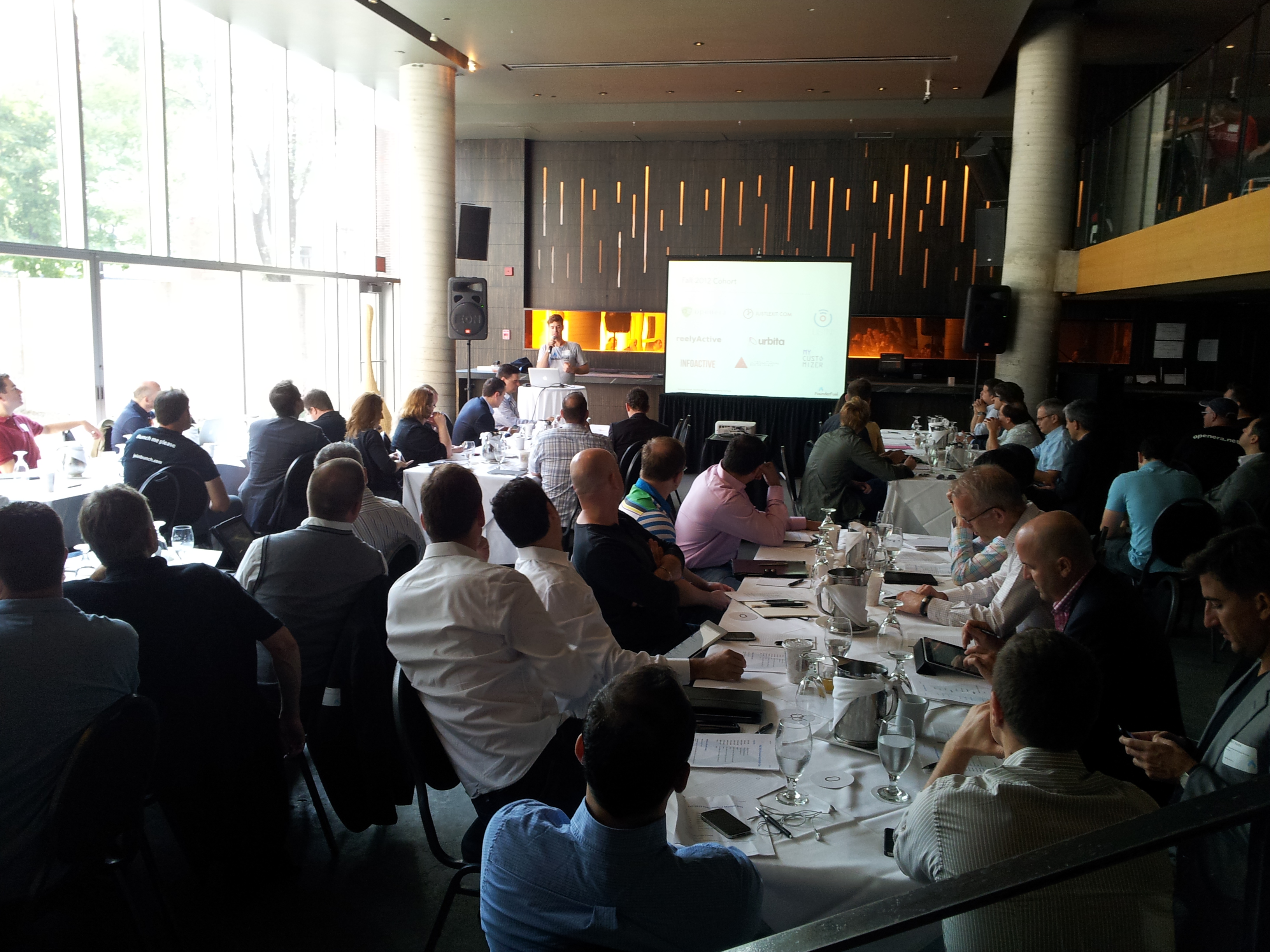
I spent the day yesterday at FounderFuel for their Mentor Day. If you aren’t familiar with FounderFuel they are a very successful startup accelerator based in Montreal. And what a day it was – 8 startups pitched and then did roundtable breakout sessions with over 50 mentors including VC’s, angel investors, entrepreneurs and senior executives. Here’s my mentor’s perspective on how a startup can really get the most out of a day like that:

1/ Pick your Target Mentors Ahead of Time: 50 mentors is a lot and they represented a wide cross section of folks that have deep experience in different consumer and business markets, and have a range of skills from technical expertise to sales, marketing, finance, and legal experience. Selecting a subset of the mentors with experience relevant to your business will help you target your discussions.A handful of the teams that needed marketing help reached out to me by email before the day and that helped to make sure that we connected at the session which I thought was pretty smart.

 7 Ways Rock a Startup Accelerator Mentor Day2/ Ask for Feedback on your Pitch: The mentors are both experienced pitch artists, and listen to pitches a lot. What better folks to give feedback on what worked and what didn’t work with the pitch you just gave? In this case the companies are all still in the early stages of the accelerator program so it’s a great time to get feedback that will improve the ultimate pitch you give on demo day. The feedback will also give you a feel for the differences in what an Angel investor might be looking for over what the more traditional VC’s are looking for in a pitch. “Tell me one thing that would have made my pitch better” or “What was missing from my pitch?” would both be great ways to start that discussion.

3/ Ask for Specific Help: The mentors are ready and willing to help but they can’t guess what you need. Coming with a set of specific requests helps shape the discussion in a way that is most helpful to you. Don’t be afraid to ask for specific introductions – even if the folks in the room don’t have the answers you need, chances are they know someone who does.

4/ Listen, Ask Questions (and Filter later): – The mentors yesterday came from really different backgrounds and had worked in a broad range of industries (consumer, gaming, retail, enterprise, financial services). Sure we’re all smart folks but you wouldn’t believe how different our opinons were about questions the startups were asking. For example, at my session with Openera – a tool for automatically organizing files and attachments –  we got into a discussion about selling to consumers versus enterprises as a starting point. I ALWAYS tilt toward enterprises when people ask me that because I know/love enterprise sales. The mentor beside me, Yona Shtern, the CEO from Beyond the Rack on the other hand thought selling B2C (or B2C2B) was just fine. Only Openera can decide who’s got smarter advice for their business (yeah OK, in this case it’s probably the smarty-pants Beyond the Rack guy but hey you get what I’m trying to say here). Another example – in the discussion with InfoActive (a very cool tool that lets you easily create beautiful interactive data visualizations), I immediately saw the applicability to creating interactive marketing materials. I’m a marketer, that’s the obvious use case for someone like me.  The mentor beside me (James Duncan, CTO at Inktank) on the other hand saw the value in selling to IT departments that needed a way to easily create good looking dashboards to help IT communicate to the business side of the house. That’s a great use case that a marketing person like me would be unlikely to immediately think of. Both ideas might be worth investigating but only InfoActive can really decide that. Avoiding “mentor whiplash”, as the FounderFuel gang refers to it, is a critical skill for startups in accelerators that have deep rosters of active mentors. Remember too that time is limited so you don’t want to waste it having a long debate with a single mentor over a specific point. Listen, probe a bit if you need to, and then move on. You can always schedule follow-on time with a specific mentor to explore an idea later.

5/ Take Notes:  You put a couple of CEO’s a VC, a senior exec and a CTO at a table together and guess what happens? We talk. A lot. Not only that but the conversation moves very quickly from one point of view to the next. Some teams were recording the sessions but the room was loud (did I mention we talk a lot?) and figuring out who said what later might be a challenge by voice alone. Having someone taking notes is a good idea to make sure that you’re capturing ideas as they are flowing.

6/ Work the Edge Time: By far the best way to get 1 on 1 time with a mentor yesterday was to do it over the break or over lunch. That also gives the mentor a chance to ask questions they might not get a chance to in a round table session.

7/ Don’t Forget Everyone’s a Potential Investor : The VC’s are easy to spot (and there were a lot of them there) but most of the mentors I talked to are also doing a bit of angel investing as well. For companies at this stage anyone that’s willing to invest time with your company might also be likely to invest cash as well.

So there’s my advice. I’m sure the other mentors all have different opinions – yep, we’re funny that way.

April Dunford

April is a marketing executive with a broad range of experience at technology companies. She specializes in bringing new solutions to to market including messaging and positioning, market strategy,go to market planning and lead generation. April has a technical background (Systems Design Engineering) and deep practical experience in marketing, product marketing and sales.

More Posts - Website

CC-BY-NC-SA  Some rights reserved by Pedro Vezini
AttributionNoncommercialShare Alike Some rights reserved by Pedro Vezini

“We are ALL in sales” – Dale Carnegie

I used to think that quota was a dirty word. It struck me as restricting freedom and potentially forced the exploitation of trusted customers and prospects to drive the bottom line results. But I was wrong. In reality, a quota is a number that is useful to incent certain behaviours. The trick is to incent the appropriate behaviours. It is a contract between a sales person and an organization about how to compensate behaviours based on outcomes.

“Quota is a direct path to clarity and accountability.” – Shawn Yeager

So many entrepreneurs can benefit from contracts with defined outcomes. I was chatting with a startup last week about the numbers he agreed to with his VC to unlock the next tranche of funding. He mentioned that he wasn’t going to meet the numbers, but he still expected the VC to unlock the funding. My advice to him was very straight forward, it was to figure out how to achieve the agreed to numbers, or immediately open a conversation with the VC about missing the numbers due to changing market conditions and see if the tranche can be renegotiated. In the case of this entrepreneur, the numbers were in the funding contract, and I fully expected the VC to hold the entrepreneur to deliver on these numbers. The numbers and metrics exist to help assess the risk and the ability of an entrepreneur to deliver.

The secret with an early stage company is to set appropriate metrics, quotas and growth numbers that incent the correct behaviours out of entrepreneurs. The good news is that there are a lot of examples of SaaS, B2B and consumer metrics that can be used.

There are a lot of different sources of metrics and numbers. Each of the numbers needs to be considered in corporate revenue goals, past historical performance, current product development stage, market share, budget, etc. The targets and growth numbers need to be established.

I’ve taken to requiring all of the startups I mentor, to establish 3 metrics that we discuss in our mentorship meetings. Each of the metrics must be clear enough for me to understand, for example:

  • Number of paying customers
  • Number of registered users
  • Churn rate
  • Number of pageviews or unique visitors

And each metric should have the current measurement, the predicted growth rate and the actual target number. I try to start each conversation around the metrics. And any issues related to the market conditions, learnings, corrections, etc. Then together we set the targets as part of the planning for the next meeting. This may include a redefinition of the metrics. The trick for me as a mentor is to try to help identify what metrics I think are most useful for the startup and founder to focus on next.

What are the metrics other entrepreneurs track? How do you set your targets and quotas?

What are the metrics and growth rates that investors like ExtremeVP, Real Ventures, iNovia Capital, GrowthWorks, Rho and others want to see from prospective early-stage companies?

David Crow

David Crow focused on product design, customer development and go-to-market implementation on $0. He is available as a consultant. He is a mentor at UW VeloCity, Jolt and FounderFuel. Follow him on Twitter @davidcrow or at DavidCrow.ca

More Posts - Website